

Look for the Union Label
An early appeal to "ethical shopping."
Miranda Priestly would say that the clothes in The Devil Wears Prada 2 were over my head. I would say that for most of the film the clothes are boring (“Blazers? For an office dram-com? Groundbreaking.”) One piece that did catch my eye was this t-shirt with the International Ladies Garment Workers Union logo on it:
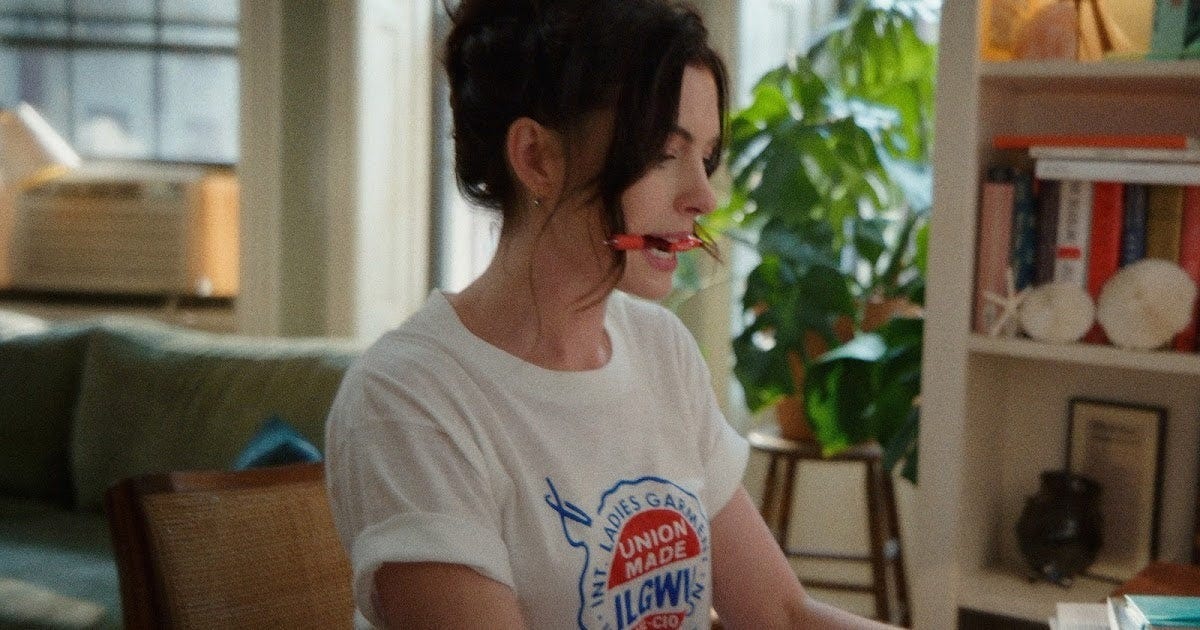
I only recognized it because way back in Mildew Issue 1, Kjerstin Johnson, former Bitch Magazine editor, introduced readers to the label’s history—basically, it was an early attempt encourage a flavor of ethical shopping. Read on to learn the bittersweet story behind the rise and fall of the iconic label.
Mildew Issue 1 is out of print, but you can get the latest issue here.
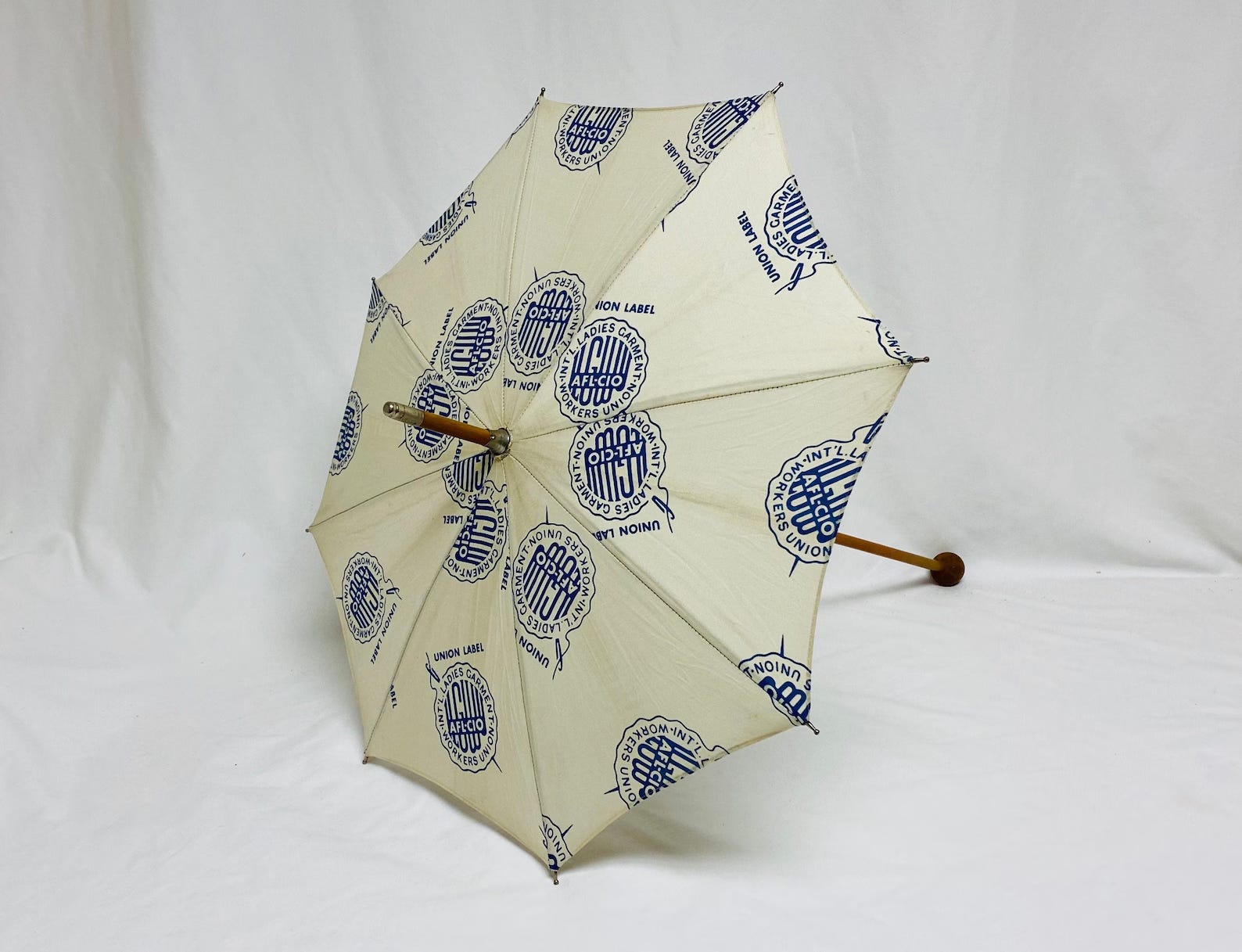
I was at my local Value Village browsing the dress section when a tag stood out to me from among the racks of LuLaRoe. It wasn’t designer—it was union. It read ILGWU in bold letters, encircled by Union Made and AFL-CIO. The butter-yellow 1960s cocktail dress was cute, my size, and only $5.99. Obviously it came home with me.
Back home with my #thriftscore, I started researching the letters on the tag. The IGLWU—the International Ladies’ Garment Workers Union—formed in 1900 in New York City’s Lower East Side, then the garment capital of the world. Unlike other labor unions at the time, its membership was majority female. (Its leadership, however, was male—and would remain so for the union’s run.)
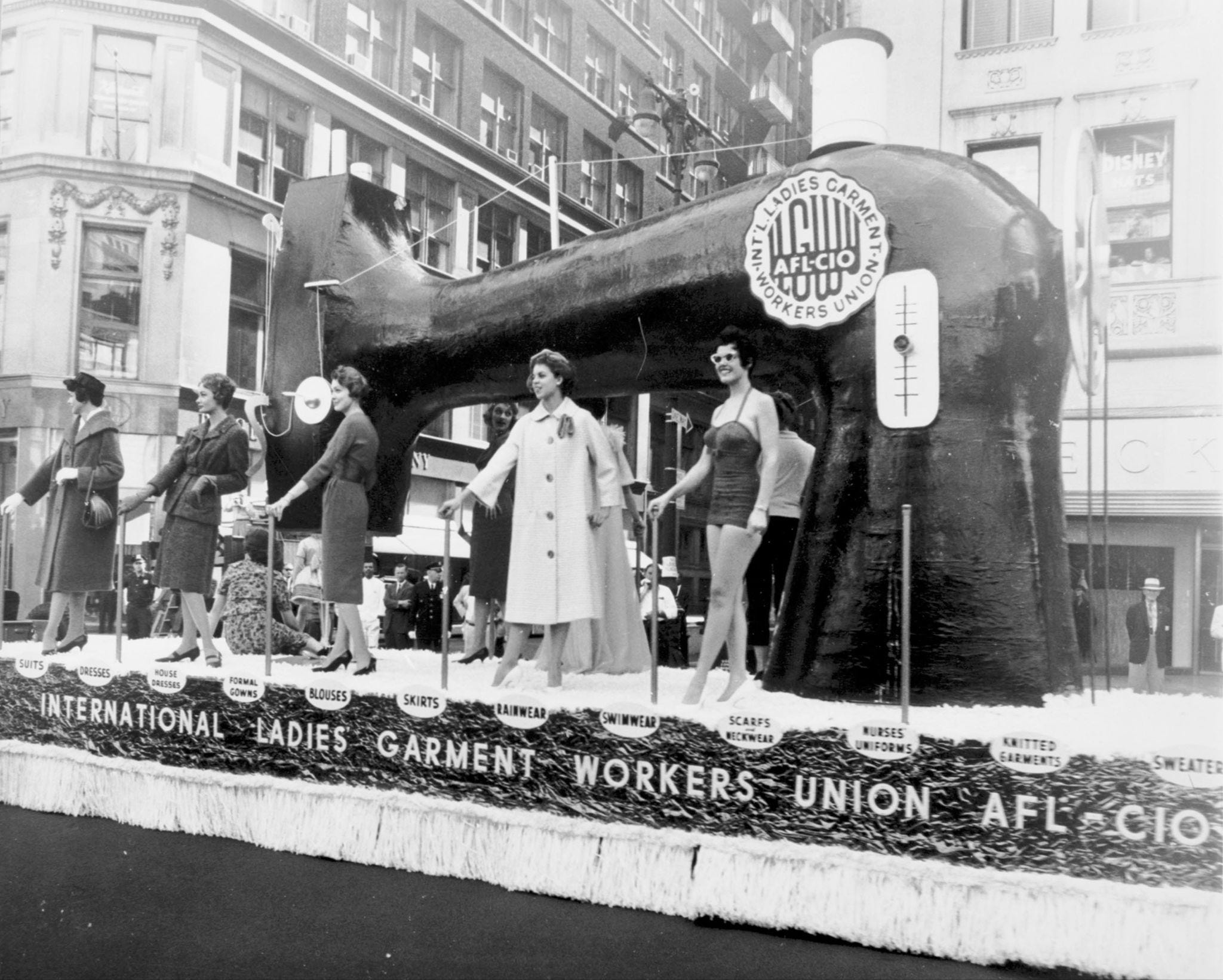
These young women were behind one of the largest labor strikes of the time, what would become known as the “Uprising of the Twenty Thousand.” In 1909, ILGWU members protested their working conditions and brought the garment industry to a halt, grabbing the attention of the entire city for a few months. They walked the picket line in the freezing cold while getting harassed or arrested by police. There was good reason to protest; less than two years later, a fire at the Triangle Shirtwaist Factory—where the ILGWU had unsuccessfully tried to unionize—left 146 workers dead.
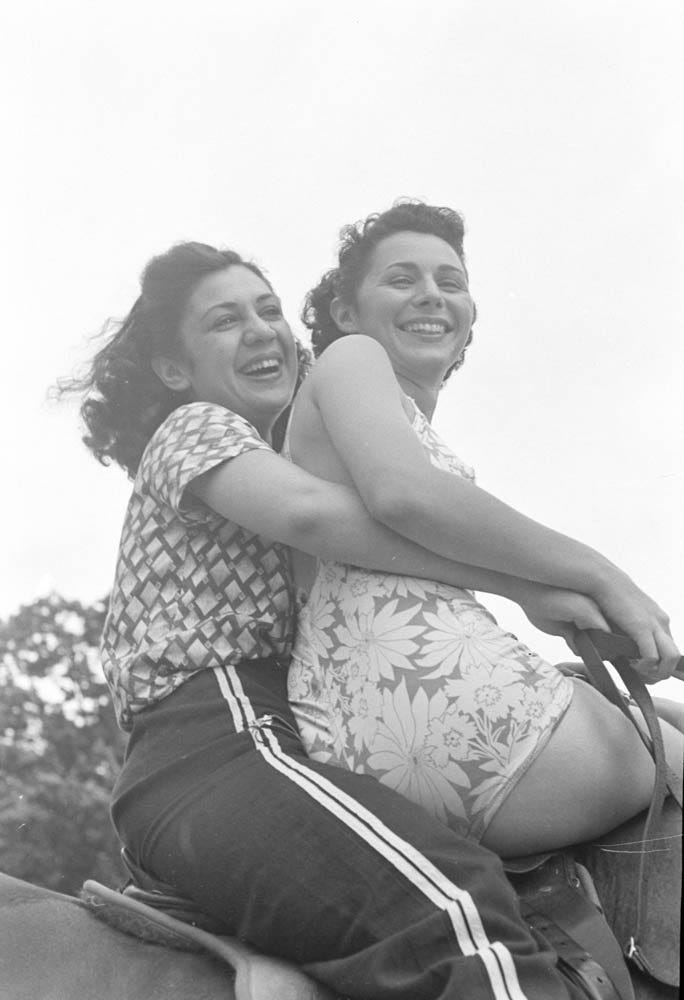
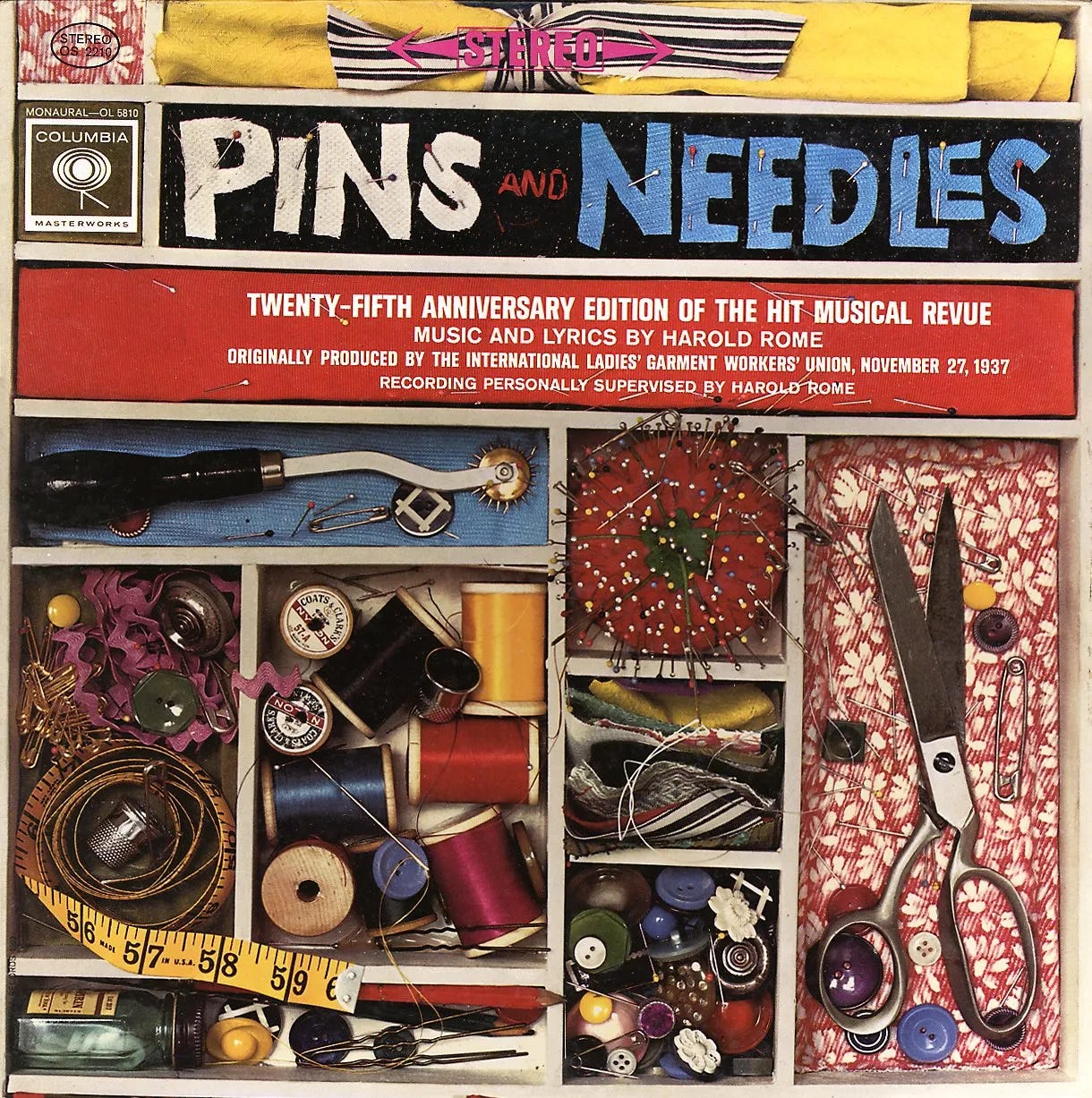
The union didn’t just protect workers and increase wages. They offered healthcare services, English classes, political education, and childcare. They formed ILGWU choruses, bands, basketball teams, even created a 1937 musical, Pins and Needles, that became a runaway hit, spawning a Broadway run, two touring companies, a Hollywood performance, and even a visit to the White House (in other words, the Hamilton of its day).
By 1969, the union had 450,000 members. But the tide was turning for American industry; new open-door trade policies encouraged clothing manufacturers to move production overseas, where they could pay workers less. As cheaper clothing started streaming into the country, union leaders knew they needed to come up with a plan.
In 1975, they released a 60-second commercial featuring a catchy new jingle: “Look for the union label when you are buying that coat, dress, or blouse,” sang a chorus of real-life union members, dressed in a colorful assortment of ILGWU-made outfits. “Remember somewhere, our union’s sewing, our wages going to feed the kids and run the house.” (You can find the full video on YouTube, as well as its SNL parody—a commercial for the American Dope Growers Union). A media campaign followed, with ads in magazines and subway cars urging consumers to shop union.
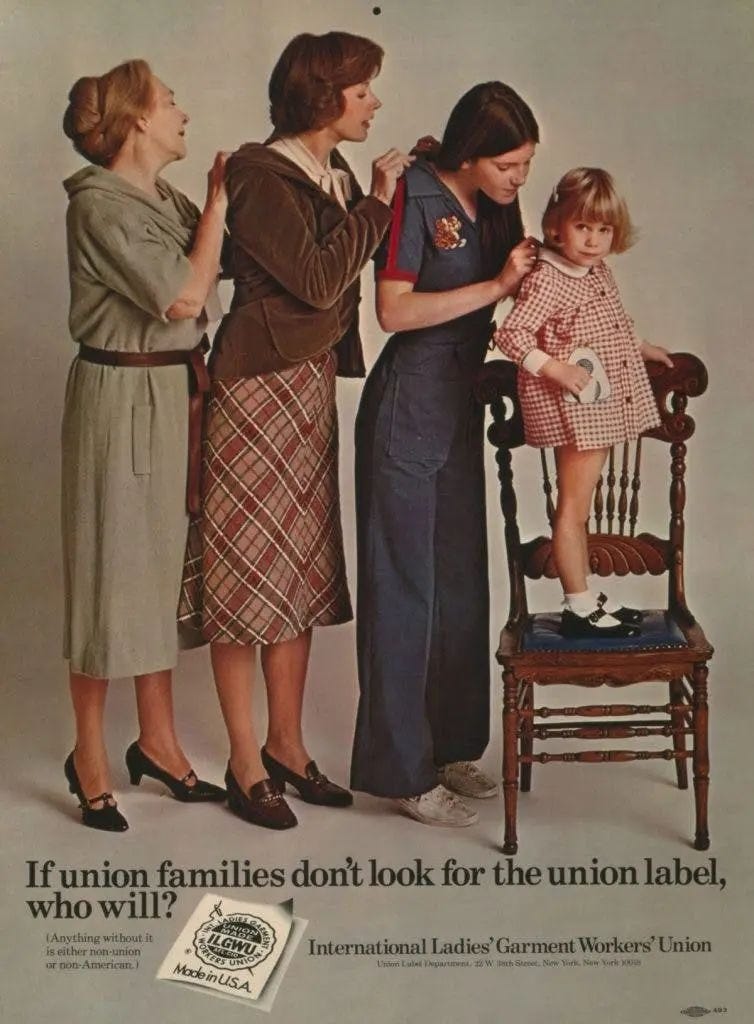
It was a valiant effort, and an early example of appealing to “ethical shopping.” The “Look for the Union Label” campaign emphasized that ILGWU workers made livable wages that supported families. But the globalization of corporate trade was too powerful. American manufacturing—not just in the garment industry—dried up, and union membership dropped drastically. Still, its later years were not without high points. In 1982, 20,000 members of ILGWU 23-25, primarily immigrant women from China, went on strike, the largest in New York City’s Chinatown. Much like the Uprising of 1909, the strike was powered by female garment workers demanding better conditions. As a result, the union contract was signed, and more services serving the Chinese membership were enacted, including a childcare center. But in 1995, the diminished ILGWU merged with another union to form the Union of Needletrades, Industrial and Textile Employees, and the last iconic ILGWU tag was sewn.
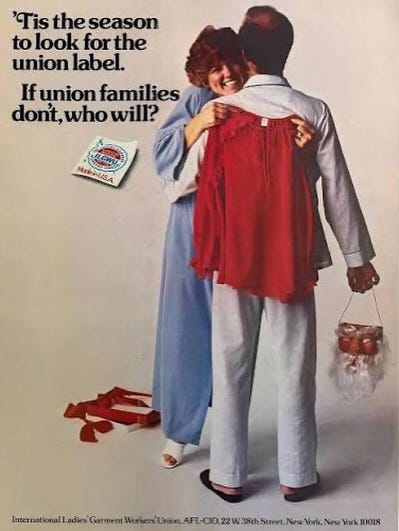
Today, the only place you can “look for the union label” is at the secondhand shop. Heck, these days it’s hard to find clothing, union or not, that was made in the United States. In the 1960s, when ILGWU had its highest membership, only 5 percent of the clothes Americans wore was made overseas. By the 1970s, it was 25 percent. Now it’s more than 97 percent. And much of that clothing is made by young women who face the same deplorable conditions seamstresses did in the early 1900s: meager pay, wage theft, sexual harassment, dangerous factories, and punishing hours.
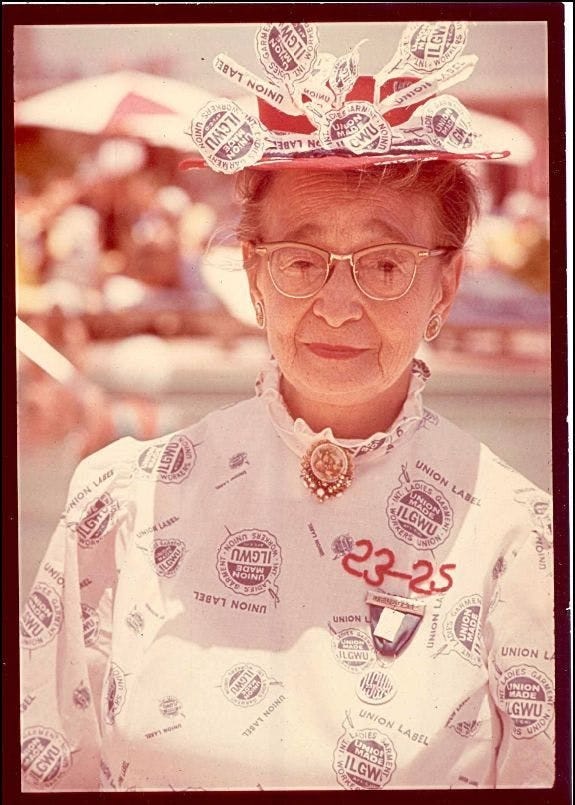
I now own two garments with an ILGWU tag. I love knowing more about the clothes and the history behind the label. But the ILGWU tag isn’t just a history lesson—it’s a reminder of how broken our current garment industry is. It’s a capitalist fantasy that we can shop our way to moral goodness. But what we can do is work against a system that tries to make laborers—and their working conditions—invisible. What if we started looking for the people behind all of our products, clothing, food, or deliveries? A union label may be a novelty these days, but thinking of workers first doesn’t have to be. For me, that’s the true legacy of the ILGWU tag.
I just had a fascinating conversation for an upcoming newsletter about the intertwining of the history of seamstresses unions and print publishing—subscribe (if you aren’t already subscribed) so you don’t miss it.