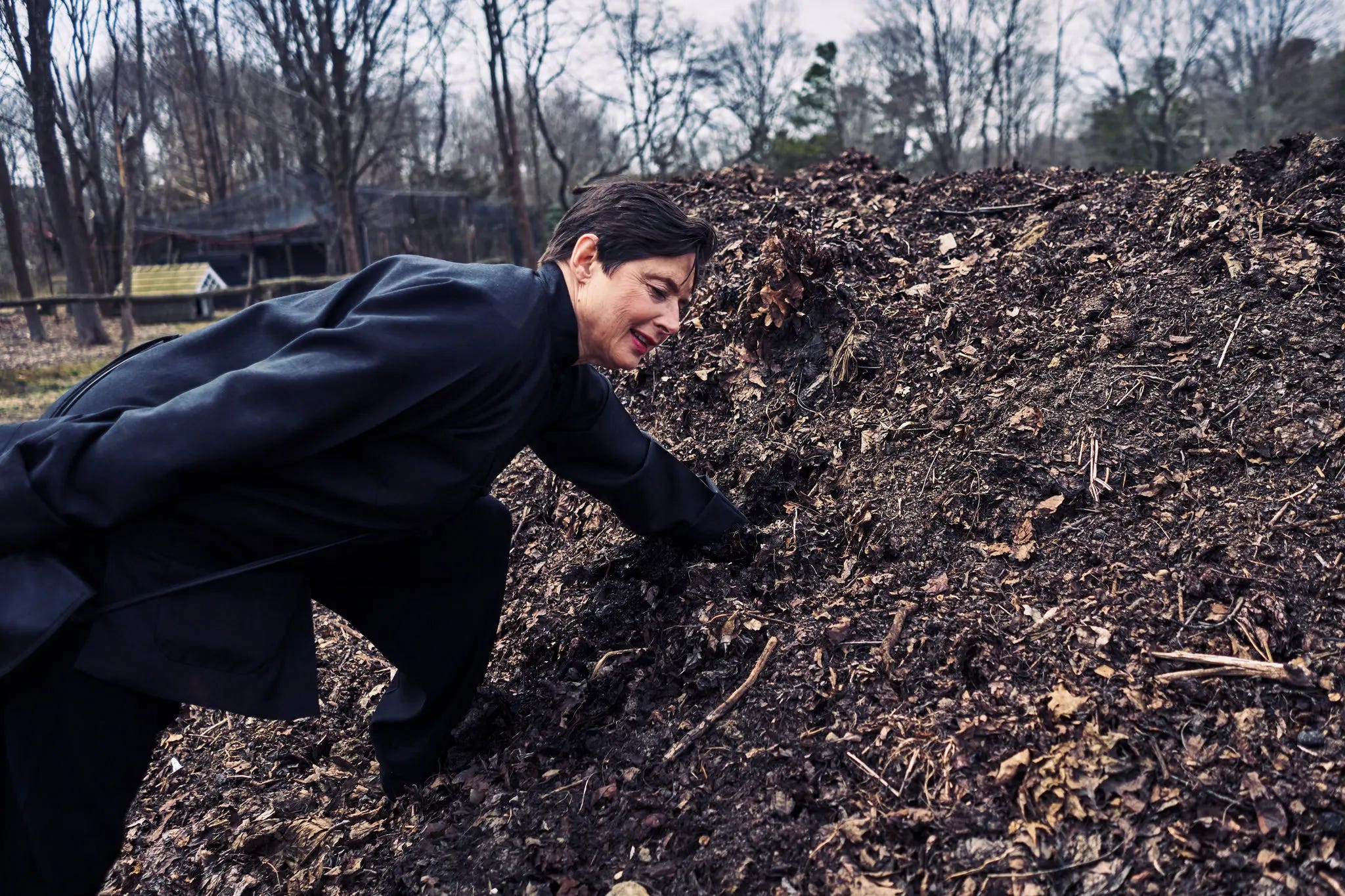
You & I Are Earth
On microbe shirts and composting your feelings.
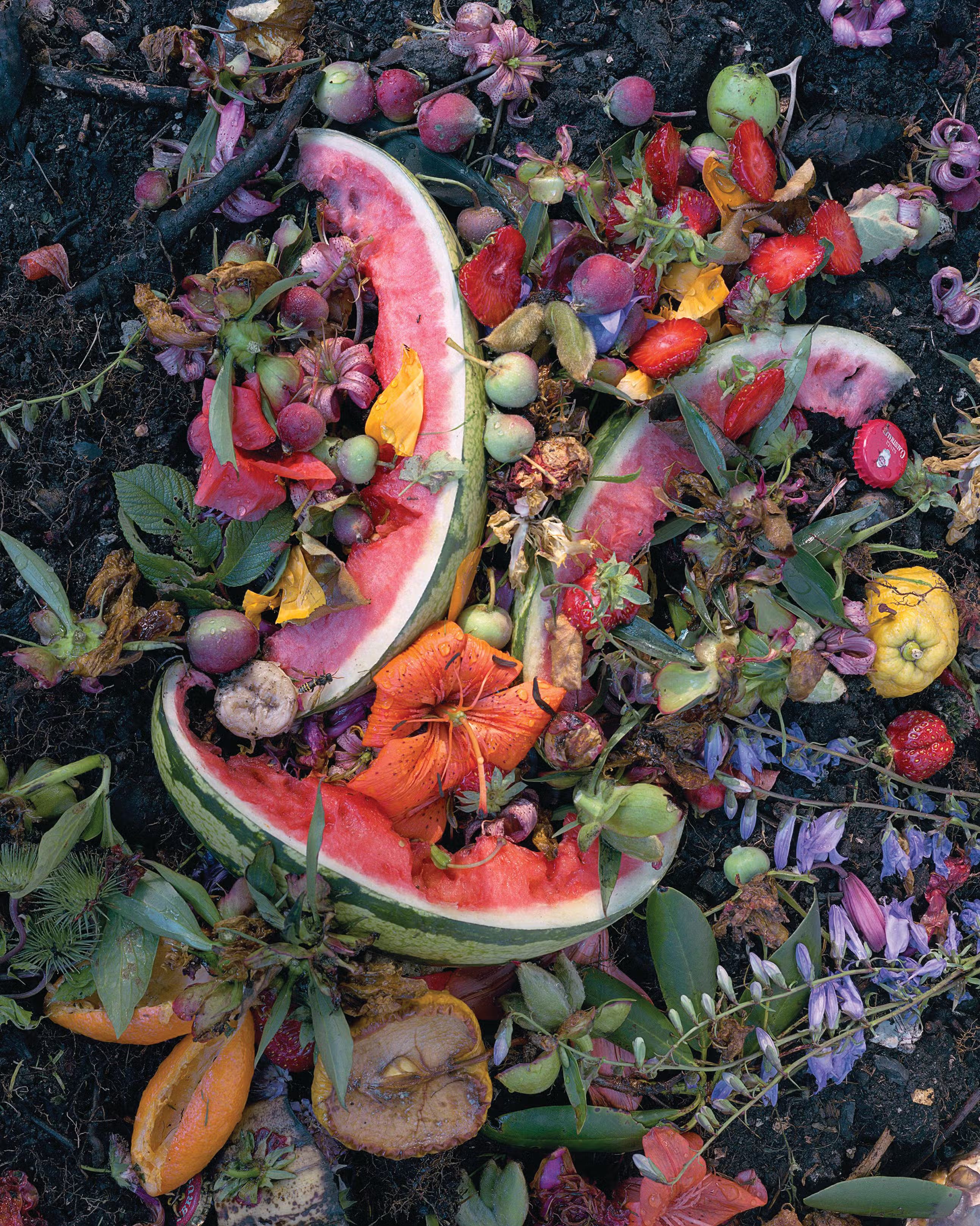
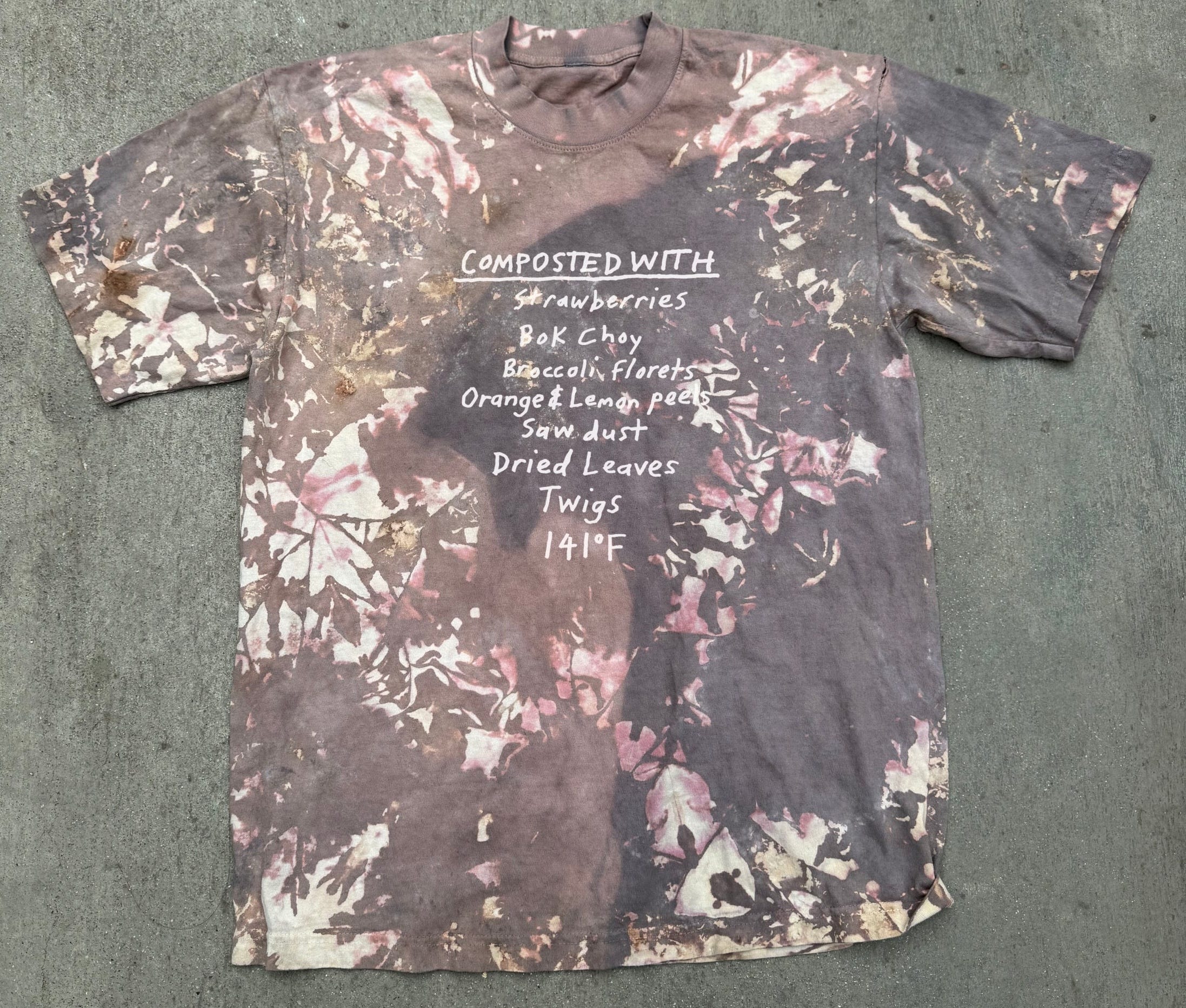
The other day, I was stopped mid-scroll by what I thought was a tie-dye t-shirt. But the galactic fractals covering it weren’t made by tie-dye, and they weren’t made by bleach—they were the work of microbes, with a little nudging from Cass Marketos.
Cass is a self-styled compost practitioner (how’s that for an AI-proof job?) and the author of Compost After Reading—a compostable book about composting—and the newsletter The Rot. “I gotta talk to this person,” I thought. Mildew x The Rot? It just makes sense.
Read on for our conversation about the poetry of decomposition, the immensity of textile waste, and the eternity of compost.
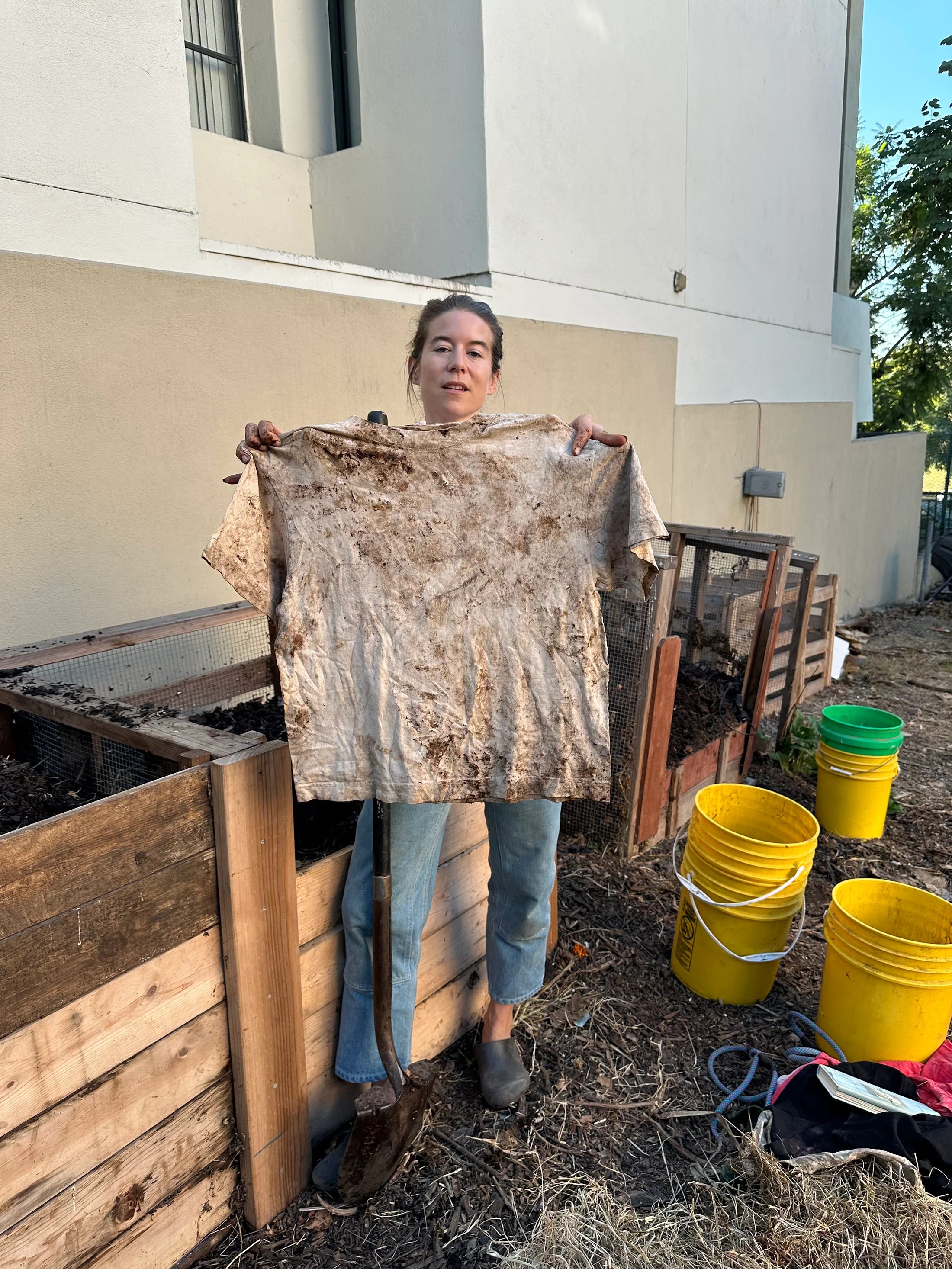
Ellen: I first started understanding decay as more than just “gross” when I was working on another magazine called Mushroom People, which is all about fungi. I learned a lot about mushrooms as these transformers and portals between realms of existence, and then I went on to name this fashion magazine after a fungus with the tagline: “Revel in the decay of fashion as we knew it.” I know you get it, so I’m curious about what draws you to decay?
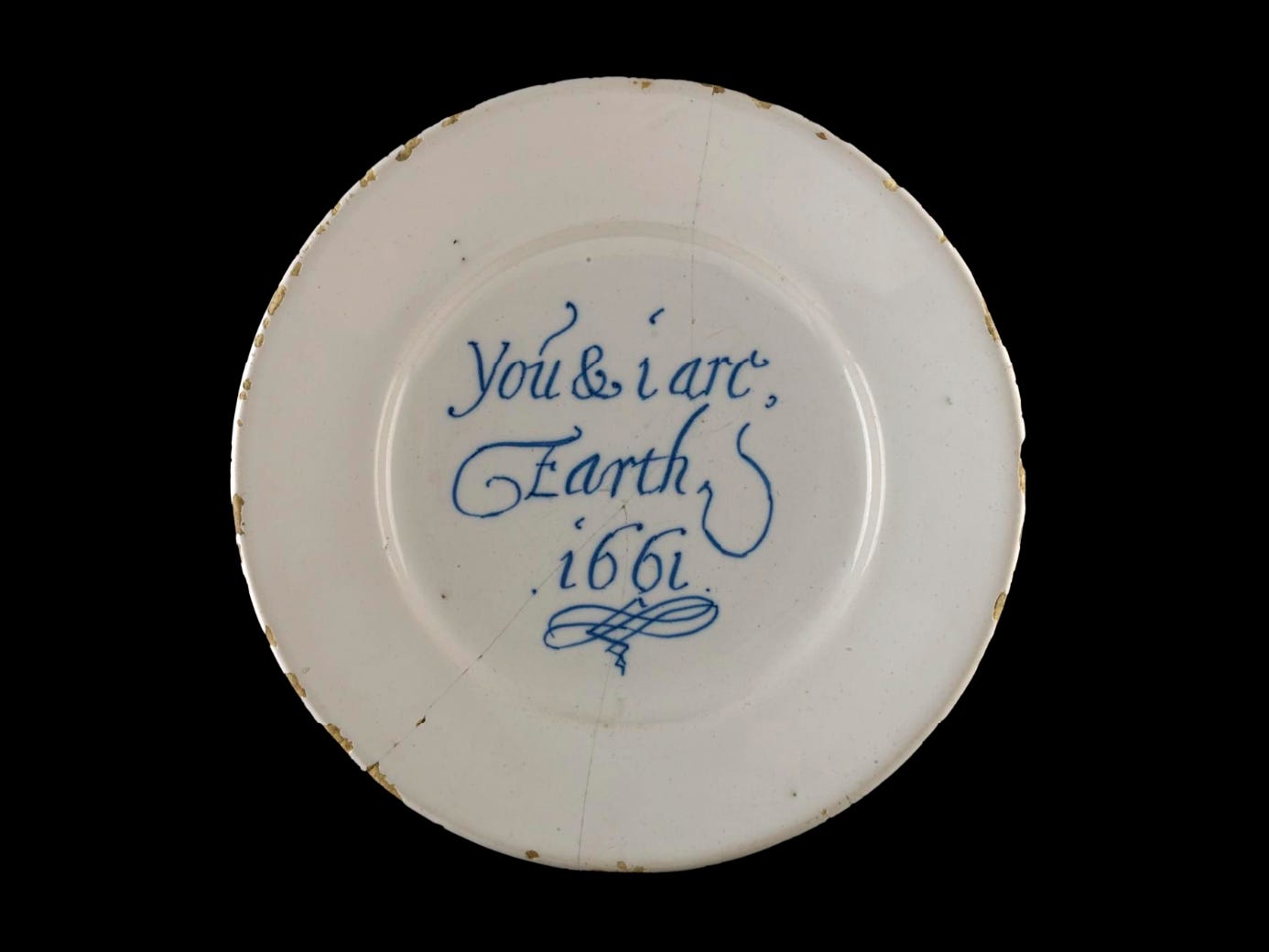
Cass: I’m laughing because the thing that drew me to decomposition is that it’s un-brandable. I had just moved to LA and was facing a moment of overwhelm with social media; everything felt so optimized and polished and branded, and it was making me feel crazy. I started a compost pile in my front yard as a pandemic hobby, and it felt like this disgusting thing that was camouflaged against branding, shelter from the storm of corporate America, safe from all of the things about contemporary existence that I was struggling with. Over time, I also developed an appreciation for how compost relocated me in the cycle of life and death; it helped me reframe grief. Before I started composting, I didn’t understand how fundamental the process of breakdown is to the process of growth—and it’s not very hard to make the leap to how true that is for us emotionally.
The thing that drew me to decomposition
is that it’s un-brandable.
Ellen: Is composting your job?
Cass: I don’t get paid for this; I work full-time outside of the compost stuff. But I’ve helped run the community compost at Echo Park Community Garden for the last six years. It’s a quarter acre next to Echo Park Lake in LA, and the land is owned and operated by a food justice organization called Seeds of Hope which runs a bunch of food banks. There are 40 fruit trees, and I think 10 veggie beds, and we have several composting systems that accept food waste from local food banks, the farmers market, businesses, and people who drop off scraps. We’re processing 20 to 25 tons of food waste a year. And all of the food that’s grown in the garden and all the compost that we make goes to anyone who wants it—for free.
Ellen: I found you because of your composted microbe t-shirts. How did you figure out that was something you could do?
Cass: There’s a shop here called Cactus Store that cultivates and sells cool cacti. I became friends with them, and they were like, “Do you think we could partially compost t-shirts and sell them as merch?” And I was like, “I don’t know—let’s try!” So they gave me a bunch of shirts, and I started experimenting with putting them in the compost. And the initial round totally fell apart. I left them in too long, and they weren’t that well-made. But then I found this local apparel brand called Everybody.World and they have something called the Trash Tee that’s made from completely post-waste cotton—remnants that would normally get thrown away. I started using those, and one day I pulled one out of the pile, and it was crusted with this very thick white fungus. I scraped off the fungus, and underneath it had been consuming the pigment on the shirt—it had eaten it off completely, and it left behind these crazy tie-dye patterns.


Ellen: Who are these microbes?
Cass: I wish I could tell you! My next pursuit is to find a lab to send a fragment to. I’ve shown it to some soil scientists friends, and they’re also like, “What the hell is this?” Many composters will recognize the moment when you open your pile, and it looks like it’s full of ash; that’s actinobacteria, which is a long-chain soil bacterium responsible for the earthy smell that we call petrichor. Is it that? I don’t know! So if any scientists out there want to collaborate with me on this, let me know.
Ellen: Calling all scientists! Is this something that curious readers could try at home, too?
Cass: Yes, but it’s a little tricky. I would recommend wetting a cotton t-shirt, balling it up, burying it a couple of feet in compost, and just seeing what happens. But the fact that you can even compost a shirt is remarkable because most of our clothing is not made from biodegradable material. Clothes are full of plastic, and there’s nowhere to put them when we’re done with them that isn’t an environmental catastrophe. To me, the baseline for anything we wear and own is that it should be able to be returned to the earth.
Ellen: That makes me think of the story Ryan Carlisle wrote in our latest issue about clootie wells—they’re these holy wells in the UK, and traditionally, people who are sick soak a strip of fabric from their clothing in the well and tie it to a tree. As the fabric dissolves in the water, so does the sickness. But of course, now the fabrics are all plastic so they don’t break down, and the writer muses about whether the ritual can still work.
Cass: Unfortunately, in our current system, it’s really expensive to make clothes that are fully biodegradable. I work for a nonprofit called Fibershed that’s devoted to rebuilding the textile system from the soil up. They’re supporting farmers and ranchers to grow cotton and raise sheep in a way that supports biodiversity, watershed health, and soil carbon. They also support local mills, which have been in free-fall in America. And there’s only one spinning facility left in America, but they’re trying to build a new one while at the same time building the market at the other end by getting companies to commit to buying that cotton once it exists.
Ellen: Wow, that kind of big-picture work is so important because it’s such a systemic problem. On the more personal end of the spectrum, I also want to hear about your compost performances.
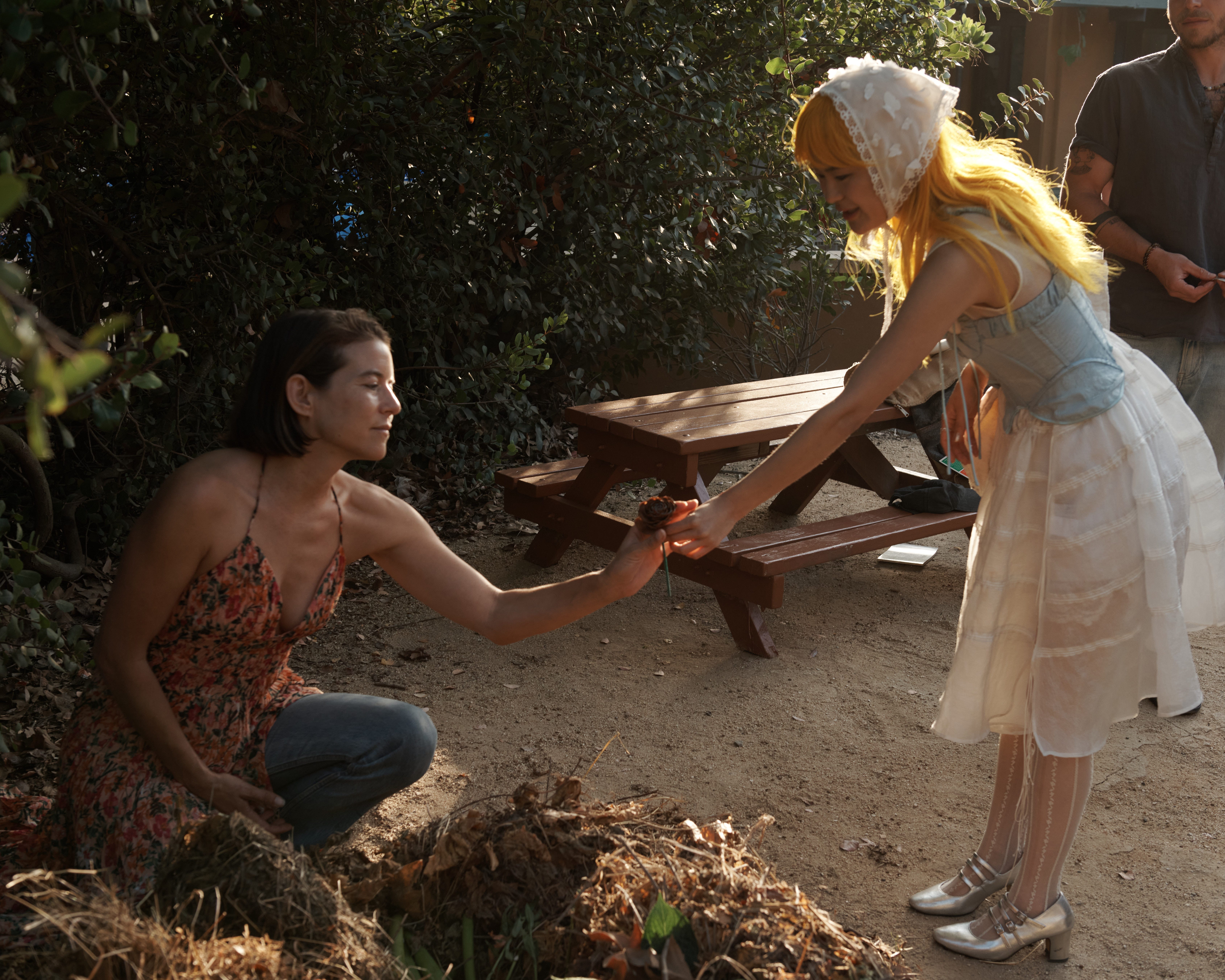
Cass: I met this artist named David Horvitz, and he invited me to be part of a group show at Vielmetter Gallery here in LA. We decided to build a compost out of things we gleaned from the gallery over a four-month period: plant clippings, papers, and coffee grounds. And for the opening, we wanted people to engage with the pile. I was reflecting on how compost had served this gestational role for me, helping me process things, and I had composted some items associated with a memory I want to reconfigure, and that had been really effective—so I extended the invitation to the ether. I really had no idea what to expect, but people showed up with totems to place in the pile: packages tied up with string, twigs, herbs, letters, books, hair…
We all have things in our life that we can’t bear to keep, but we can’t bear to give away.
It was so sweet. I’ve now done it three times, and I’m always really moved by how much meaning people bring to it. I think that we don’t necessarily want all of the things that hurt us to disappear. We all have things in our lives that we can’t bear to keep, but we can’t bear to give away. And composting is an alternate path where you’re doing neither. You’re granting autonomy to an item to live its own life. It’s out there, and it’s everywhere—it’s not only in you. It’s eternal.
Cass’s secondhand recommendations:
Secondhand inspiration: “Worn: A People’s History of Clothing—one of the most incredible overviews of the history of textile manufacturing there is. It’s not about fashion, exactly, but it’s very, very clarifying in terms of the true cost of our current system. I think it should be taught in schools.”
Favorite place to shop secondhand: “I am a chronic inheritor of other people’s castoffs, that is the stone-cold truth. I rarely, rarely shop—even in thrift stores. I have some shirts in my closet that have been with me for more than 20 years. There’s a vintage store in Echo Park called Sleeper that I love, though, and it’s reasonably priced compared to other LA ‘thrift’ stores.”